Paper stamp cards have been around for decades. You've seen them in wallets, found them in coat pockets, and probably have a few half-stamped ones from your favourite coffee shops. They're simple, cheap, and require nothing from your customer except turning up.
Digital loyalty programmes are newer. They've come a long way from clunky apps that required sign-up forms and personal details. The best ones today work entirely in a mobile browser: scan a QR code, collect a stamp, done.
So which should you choose? Here's a practical comparison for South African small business owners.
Paper stamp cards: the case for
- ✓Zero setup cost. Print a few hundred cards from a local print shop and you're live.
- ✓No technology required, from you or your customer.
- ✓Familiar and tactile. Some customers genuinely like them.
- ✓Works for any business, anywhere, without Wi-Fi.
Paper stamp cards: the honest downsides
- ✓Cards get lost. When they do, the customer loses their progress, and often loses motivation to restart.
- ✓Cards get damaged. Washed in a pocket, scrunched in a bag.
- ✓You have no data. You don't know who your loyal customers are, how often they visit, or when they're about to earn a reward.
- ✓Customers can cheat. It's easy to stamp your own card at home, or have a friend do it.
- ✓No way to communicate. You can't reach any of your stamp card holders. They're anonymous.
- ✓No discovery. New customers can't find you through a paper card.
Digital loyalty: what it actually gives you
The biggest shift with a digital loyalty programme isn't the customer experience (though that improves too). It's what you can do on the back end.
- ✓You know who your customers are. You can see who's visited twice this week, who earned a reward last month, who hasn't been in for a while.
- ✓Stamps don't get lost. A customer's progress lives on their phone and in your dashboard.
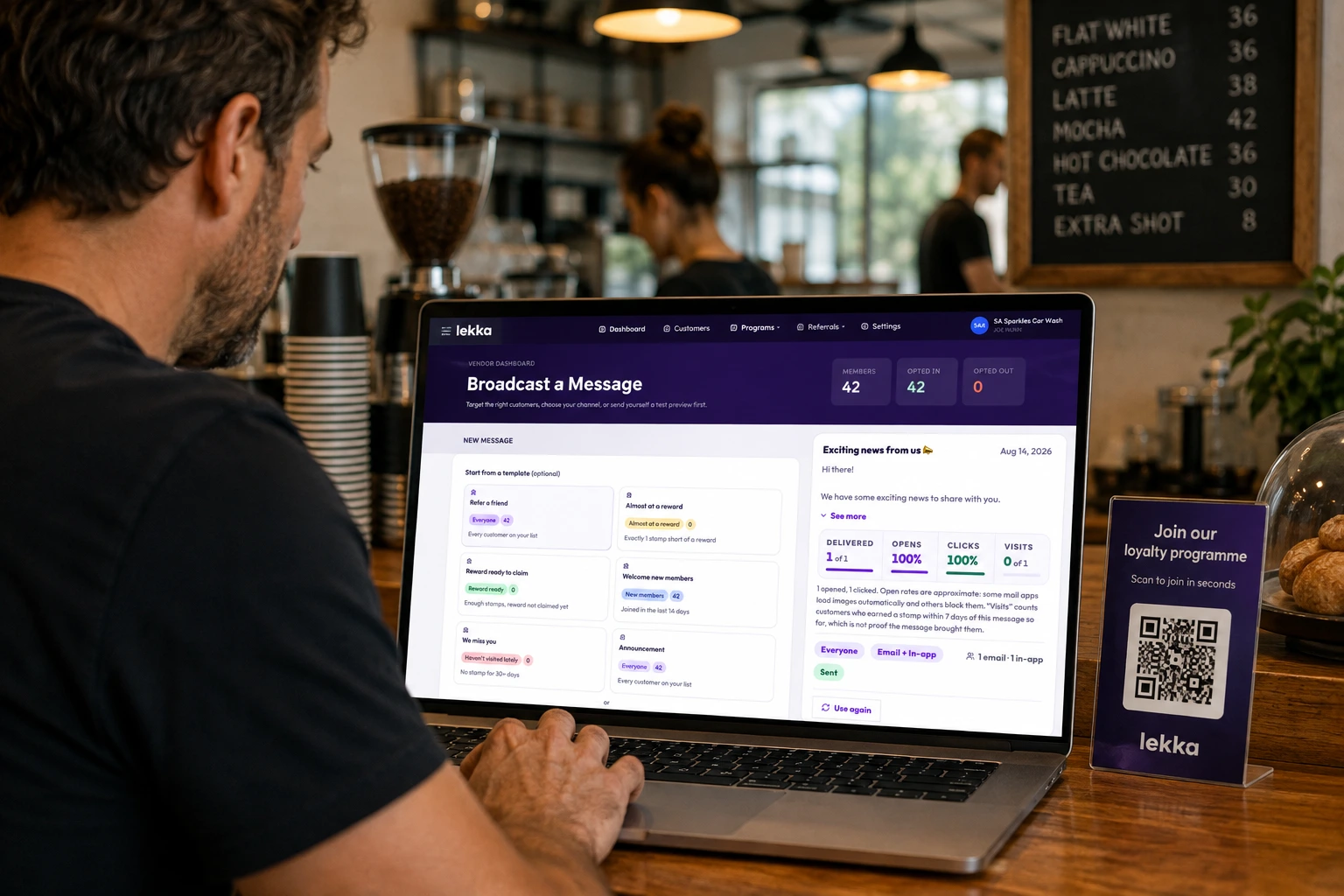
- ✓You can communicate. Broadcast a message to everyone in your programme: a special, an event, a new product.
- ✓No fraud. Digital stamp systems are designed so customers can't self-stamp. Each QR scan generates a one-time token.
- ✓Discovery. Platforms like Lekka give customers a reason to explore local businesses they've never visited.
Digital loyalty: the honest downsides
- ✓There's a monthly cost. Paper cards are cheaper upfront.
- ✓Requires a smartphone. Most South Africans have one, but not all.
- ✓Needs to be set up. Still a 15-minute job for most platforms, but it's not zero.
- ✓Some older customers will prefer the paper card. You may need to run both during a transition.
The app-download problem, and how it's been solved
The biggest criticism of digital loyalty used to be: "My customers won't download another app." That was fair.
But the best digital loyalty card apps today, including Lekka, work entirely in the customer's mobile browser. Scan a QR code, collect a stamp on your digital rewards card, see your progress. No download. No account required. This removes the main friction point that made early customer loyalty schemes hard to sell.
Live demo
Corner Cafe
Somerset West, CT
Your reward
Free flat white
Try it yourself. This is exactly what the digital experience feels like for your customers.
💡 Tip
If you're currently using paper stamp cards: keep them for a month while you introduce the digital option. Let customers migrate their existing progress over. Once they've collected a few digital stamps, most don't go back.
Free resource
Not sure what reward to offer?
The reward is the most important design decision in your loyalty programme. We've put together five proven reward ideas for South African independent businesses, with margin guidance and real examples.
See 5 reward ideasFree, no sign-up required
Which should you choose?
If you're just starting out and want to test whether loyalty makes sense for your business, paper cards are a fine starting point. They cost almost nothing and tell you whether customers engage with the concept.
If you've been running paper cards for a while and want to know who your customers are, be able to communicate with them, and stop losing progress to lost cards, digital is the right move.
For most independent South African businesses in 2026, the question isn't whether to join the shift to digital reward programs. It's which digital loyalty card app and loyalty platform suits you. Loyalty cards in South Africa have largely moved to the phone, and the businesses still using paper are falling behind.