Walk into a coffee shop at 8am and you'll see two kinds of customers: the ones who look around deciding what to order, and the ones who walk straight to the counter because they've already decided. The second group is your business.
Regulars spend more per visit, tell their friends, and form the reliable revenue base that keeps a small coffee shop alive through slow weeks. Building them is the most important thing you can do, and most of it doesn't cost much money.
1. Get the basics right first
This sounds obvious, but loyalty strategies only amplify what's already there. If the coffee is inconsistent or the service is cold, no programme will fix it.
What turns a first-time customer into a regular is usually a combination of: consistently good product, remembering their name or order, and creating a space they want to be in. These cost almost nothing and compound over time.
Free resource
Not sure what reward to offer?
The reward is the most important design decision in your loyalty programme. We've put together five proven reward ideas for South African independent businesses, with margin guidance and real examples.
See 5 reward ideasFree, no sign-up required
2. Run a digital loyalty programme
A digital loyalty card programme is the simplest tool for converting first-time visitors into regulars. It gives someone a concrete reason to come back: they're working towards a customer reward they can see and track on their phone.
Paper stamp cards have the advantage of being cheap to produce, but they get lost and give you nothing in return. A digital stamp programme (a QR code at the counter, collecting on their phone) solves the lost-card problem and, crucially, gives you a way to communicate with your customer base.
Loyalty Card
Corner Cafe
Coffee Rewards · Helderberg
Your stamps
Your reward
Free flat white
This is what the digital stamp card looks like from a customer perspective.
💡 Tip
Set the stamp target between 6 and 10. Lower than 6 is too easy and you give away too much. Higher than 10 starts to feel unachievable. Most successful coffee shop programmes land at 9 stamps for a free coffee.
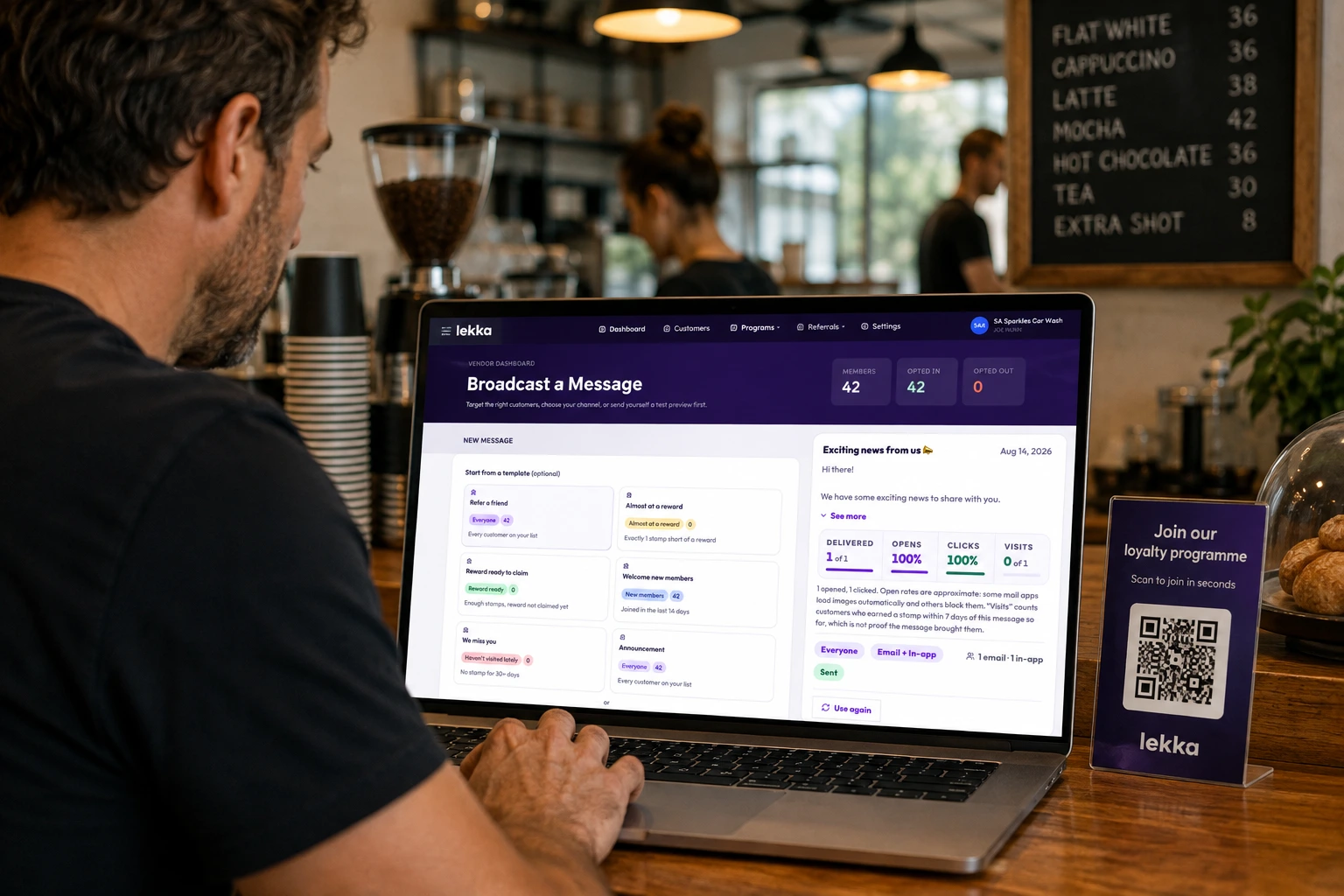
The digital advantage that most coffee shop owners underestimate: broadcast messaging. A good loyalty card app doesn't just track stamps. It gives you a direct communication channel. Once you have 50 enrolled customers, you can broadcast a message when you have leftover baked goods at 3pm, a special on the weekend, or a new menu item worth shouting about.
3. Know your slow times, and address them directly
Most coffee shops have a morning rush and a mid-afternoon slump. Regulars tend to visit at their habitual times, so your slow periods are often slow because casual visitors don't have a reason to choose that time.
Options that work: a coffee-and-cake deal between 2pm and 4pm, double stamps for Tuesday morning visits, or a standing weekend offer that makes your shop the obvious Saturday morning choice.
4. Be part of the neighbourhood
Independent coffee shops that build the strongest regulars base tend to be genuinely embedded in their local community. This looks different in different places, but the common thread is that the shop is a place, not just a transaction.
- ✓Stock a local artist's work on the walls (and tell people who made it).
- ✓Know your regulars by name, and their order.
- ✓Support local events and let your regulars know you did.
- ✓Put up a community notice board if you have the space.
- ✓Partner with nearby businesses (a bookshop, a yoga studio) for cross-promotions.
In South Africa, #LocalIsLekka isn't just a slogan. Customers who actively want to support local businesses already exist. Your job is to give them a reason to make your shop part of their routine.
5. Make it easy to come back
Every friction point in the return journey is a reason for a customer to drift. Think through the experience from their perspective:
- ✓Do they know your hours? Put them everywhere: Google Business Profile, Instagram bio, your door.
- ✓Is parking easy? If it's not, acknowledge it and suggest alternatives.
- ✓Is there seating? If you're small, can people pre-order to pick up?
- ✓Do you have Wi-Fi? For remote workers, that's a reason to make you their regular office.
- ✓Is your loyalty programme visible? The QR code should be on the counter, not hidden behind the machine.
6. Build your Google presence
When someone searches "coffee near me" in your neighbourhood, you need to appear. A complete Google Business Profile with real photos, accurate hours, and regular responses to reviews is free and genuinely drives foot traffic.
Reviews matter more than most coffee shop owners realise. A new customer choosing between two unfamiliar shops will almost always pick the one with more reviews and a higher rating. Ask your regulars to leave a review. Most will, if you ask directly.
The long game
Building regulars takes time. It's not a campaign you run. It's a set of habits you build. Consistent product, genuine warmth, a loyalty programme that rewards the people who keep coming back, and a presence in your community.
The independent coffee shops that last 10 years in South Africa aren't the ones with the best Instagram. They're the ones where the owners know people's names.