Independent retail in South Africa is under real pressure. The major chains have scale, buying power, marketing budgets, and now sophisticated digital loyalty programmes that keep customers coming back. Pick n Pay Smart Shopper. Woolworths Rewards. Checkers Xtra Savings. These programmes are engineered by teams of data scientists and loyalty specialists.
What they don't have, and what you do, is a relationship. When a customer walks into an independent shop, they're often greeted by name. They're buying from someone who knows their preferences, remembers what they bought last time, and can make a genuine recommendation. The loyalty advantage for independent retailers isn't the points system. It's the relationship. A digital loyalty programme formalises and extends that relationship.
Does retail loyalty work at small scale?
The loyalty research on retail is clear: programmes increase visit frequency and basket size. The 2024/25 Truth & BrandMapp data shows that 77% of South African consumers say loyalty influences where they buy groceries, and the same psychology applies to independent retail. Customers who are enrolled in a programme and building toward a reward choose to shop with you rather than walking past.
For independent retail, the most relevant metric is return rate: how often enrolled customers come back compared to those who aren't enrolled. The programmes that work are simple: stamp once per visit or once per transaction above a minimum spend, earn a reward after a set number of stamps.
The right programme design for a retail shop
Visit frequency varies enormously in retail. A deli or health shop might see the same customers three times a week. A gift shop or homeware store might see them monthly. Design your programme to match your actual visit patterns.
- ✓High-frequency retail (deli, health shop, bottle store): 8–10 stamps, reward after roughly 3–4 weeks of regular visiting.
- ✓Medium-frequency retail (clothing, homeware, gifts): 5–6 stamps, reward after roughly 2–3 months.
- ✓Mixed-frequency: consider a spend-based threshold ('earn a stamp with every purchase over R200') to reward meaningful transactions regardless of visit cadence.
Free resource
Not sure what reward to offer?
The reward is the most important design decision in your loyalty programme. We've put together five proven reward ideas for South African independent businesses, with margin guidance and real examples.
See 5 reward ideasFree, no sign-up required
Rewards that work for independent retailers
The best rewards in retail are ones that bring the customer back into the shop. A R50 off voucher on their next purchase is better than a free product they might not need: it guarantees another visit. A percentage discount on a future transaction works similarly.
For curated or boutique shops, consider a reward that gives access to something exclusive: early access to a new collection, a complimentary gift wrapping service, or a free styling consultation. This positions loyalty as a premium relationship rather than a discount programme, which protects your margin and your brand.
☕ Real example
A Somerset West gift and homewares shop runs a Lekka programme with 6 stamps to a R100 voucher. Their average transaction is R450. The reward costs 22% of one transaction but drives 6 visits, and enrolled customers have a meaningfully higher return rate than walk-ins who didn't join.
The competitive advantage you already have
Major chains invest millions in loyalty technology to approximate the personalisation that independent retailers do naturally. You know your customers. You remember preferences. You notice when a regular hasn't been in for a few weeks.
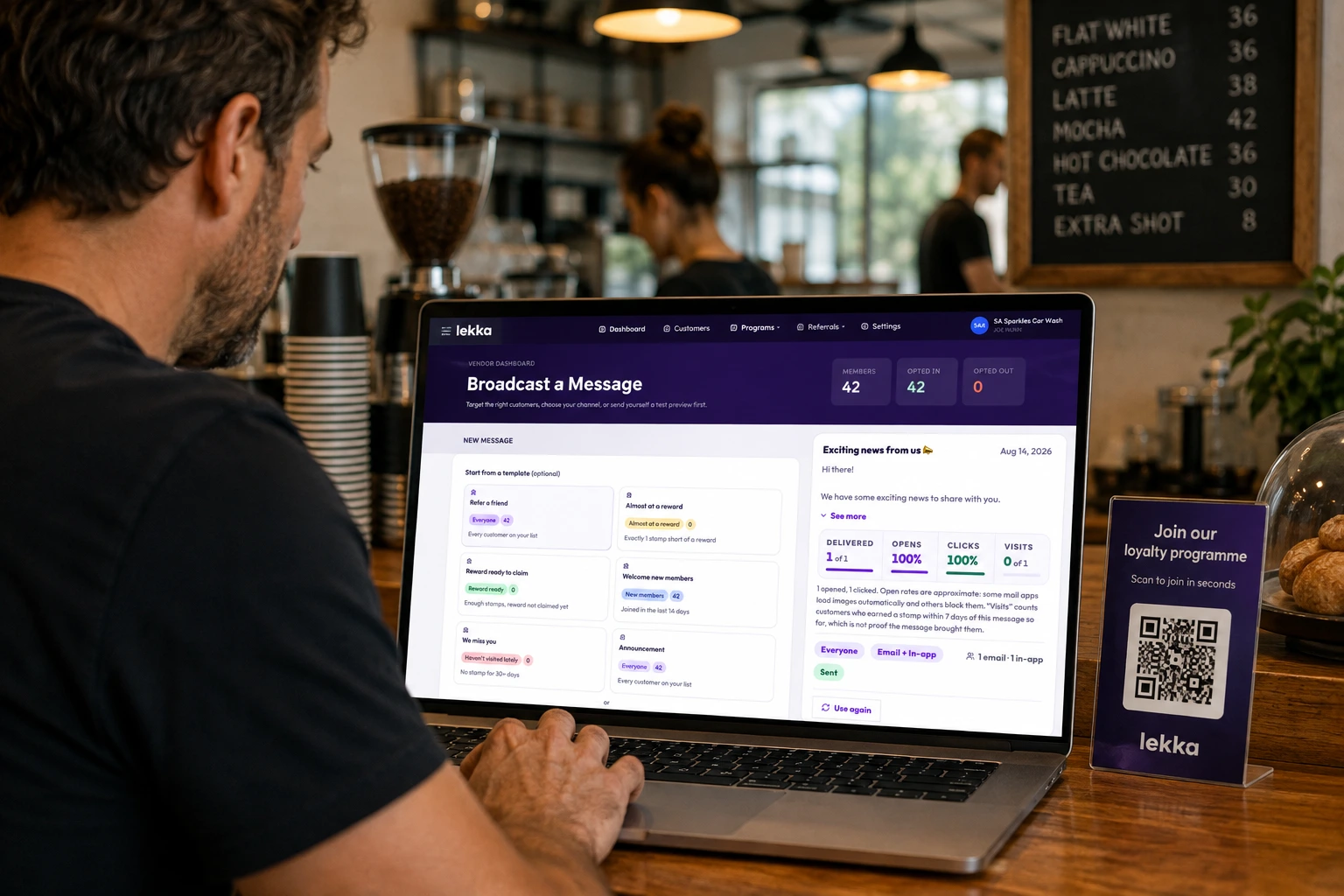
A digital loyalty programme amplifies this. Instead of relying on your memory, you have a customer list with visit history. Instead of hoping loyal customers think of you, you can send a broadcast. Instead of guessing who's close to a reward, you can see it in the dashboard and make a personal mention when they're next in.
Getting your first 50 customers enrolled
The biggest mistake retail shops make with loyalty programmes is passive promotion: putting up a sign and hoping customers notice. Active enrolment is far more effective. Tell every customer about the programme when they're paying. Put the QR code at eye level next to the card machine. Have a short verbal invite: "We have a loyalty card, you'd earn a stamp today and get R100 off after six visits."
Your first 50 enrolled customers are your most important ones. Once you have them, you have a loyalty base you can communicate with, data you can learn from, and proof that the programme is working. Getting there is a month of consistent effort at checkout, not a marketing campaign.