Pet grooming has the best repeat-business potential of almost any small service: a dog needs grooming every four to eight weeks, indefinitely, for its whole life. A single loyal client can be worth thousands of rands a year for a decade. And yet most groomers lose clients not to a competitor, but to plain forgetfulness: the rebooking that never got made.
That's the whole game. The grooming itself sells the relationship; the client leaves delighted. What's missing is the system that brings them back on schedule instead of leaving it to chance. Here's how to build it.
1. Capture the client at the first groom
The first visit is your one guaranteed touchpoint, and the moment the client is happiest. They've just collected a clean, good-looking, happy pet. That's exactly when to get them onto a loyalty card. Leave it, and they walk out as an anonymous one-off you have no way to reach. Capture them while they settle up, and you've started a relationship you can actually maintain.
A digital loyalty card makes this frictionless: the client scans a QR code, enters a name and email, and they're in: no app to download, no form to fill in. Ten seconds at the counter turns a stranger into a contact you can prompt, reward, and keep.
2. Make rebooking the default, not an afterthought
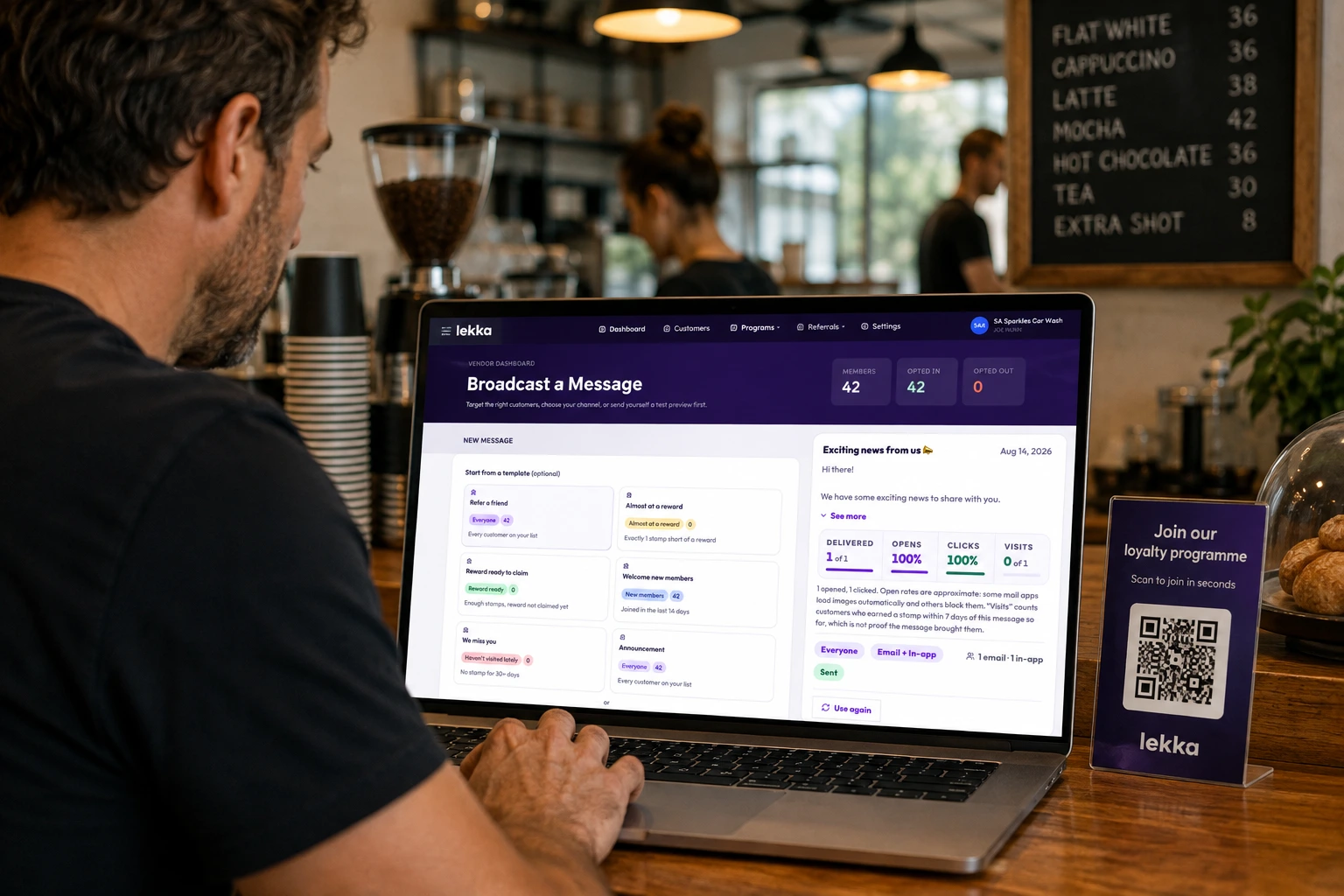
The single biggest lever in grooming is the next booking. The best groomers rebook on the spot, but life intervenes and plenty of clients leave without a date. That's where a direct channel to your clients pays for itself: a simple nudge to clients whose pets are due, like "Bella's about due for a groom, want to book her in?", keeps your diary full and your regulars on schedule.
💡 Tip
Use the same channel to fill last-minute cancellations. A Saturday no-show is lost revenue unless you can reach clients fast. A quick broadcast about an open slot often fills it within the hour.
3. Reward loyalty with the right stamp count
A loyalty card works beautifully for grooming, but only if you set it for grooming's rhythm, not a coffee shop's. Because visits are weeks apart, a 10-stamp card means a reward that's a year or two away, which motivates nobody. Five or six is the sweet spot: collect five grooms, get the sixth free, and the reward lands within a realistic timeframe that keeps clients coming back to you rather than shopping around.
The reward doesn't have to be a full free groom, either. A free add-on, like a nail trim, a teeth clean, or a de-shed treatment, keeps your cost lower while still feeling generous. The point is to give the client a running reason to stay with you instead of trying the new place down the road.
4. Compete on relationship, because that's where you win
The big pet retailers run loyalty programmes, but they're built around selling food and accessories, not around the hands-on grooming relationship. They capture the shopping data while you do the work that actually builds the bond with the pet and the owner.
That bond is your unfair advantage. You know the dog's name, its temperament, how it likes to be handled. A loyalty card simply puts a system behind a relationship you already have: recognising loyal clients, prompting their next visit, and rewarding them for staying. No retail chain can replicate the trust an owner places in the person who grooms their pet.
Set up a grooming loyalty card in minutes
Lekka is the digital loyalty card built for South African pet groomers: clients join by scanning a QR code, no app download, and you can prompt rebookings and fill cancellations with a quick message.
See Lekka for pet groomersFree to start · no per-transaction fees · no contract
A few mistakes to avoid
- ✓Copying a coffee shop's stamp count: grooming is infrequent, so use 5 to 6, not 10.
- ✓Not capturing client details at the first groom: that is your one guaranteed touchpoint.
- ✓Leaving rebooking to memory: prompt clients whose pets are due, and fill cancellations fast.
- ✓Making the reward feel small: a free groom or a real add-on beats a token discount.
Grooming is one of the few businesses where loyalty is almost guaranteed if you simply stay in touch. Capture the client, prompt the next booking, reward them for coming back, and a single first groom becomes a relationship that books itself, every six weeks, for years.