A bottle store has a hard version of an easy problem. Customers buy alcohol regularly, so repeat demand is guaranteed. But liquor is also the most comparison-shopped category there is. A buyer will happily drive past you for a case that's R30 cheaper at the supermarket liquor aisle. Without a reason to come back specifically to you, every customer is a one-off.
You can't win a price war against Pick n Pay Liquor, Checkers LiquorShop, or Tops. What you can do is build the things they can't: range, genuine advice, and a relationship that recognises a regular. Here's how to turn occasional buyers into customers who default to your shelves.
1. Give the regular a reason that isn't just price
Price is the chains' game. Yours is everything around it: knowing your stock, making a confident recommendation, remembering what a customer likes, and stocking the craft gin or boutique wine the supermarket won't. A customer who trusts your advice stops shopping on price alone, because they're buying your judgement, not just the bottle.
That trust is what a loyalty programme formalises. When a regular knows that choosing you also earns them something, and that you recognise them when they walk in, the small price difference at the supermarket stops being decisive.
2. Reward loyalty, not volume
This is the one design rule that matters most for a bottle store. Build your programme around repeat visits and the total relationship, not around drinking more in a single sitting. A stamp for each qualifying visit (say, any purchase over an amount near your average basket), with a full card earning a reward, rewards a customer for choosing you again and again. That's the responsible kind of loyalty, and it's also the more profitable kind.
📌 Note
Keep rewards modest and visit-based: a free bottle of house wine or a meaningful rand-value off after several visits. The goal is to recognise customers who keep choosing your shop, the same as any retail loyalty card, not to push consumption.
3. Make "new stock" your best marketing channel
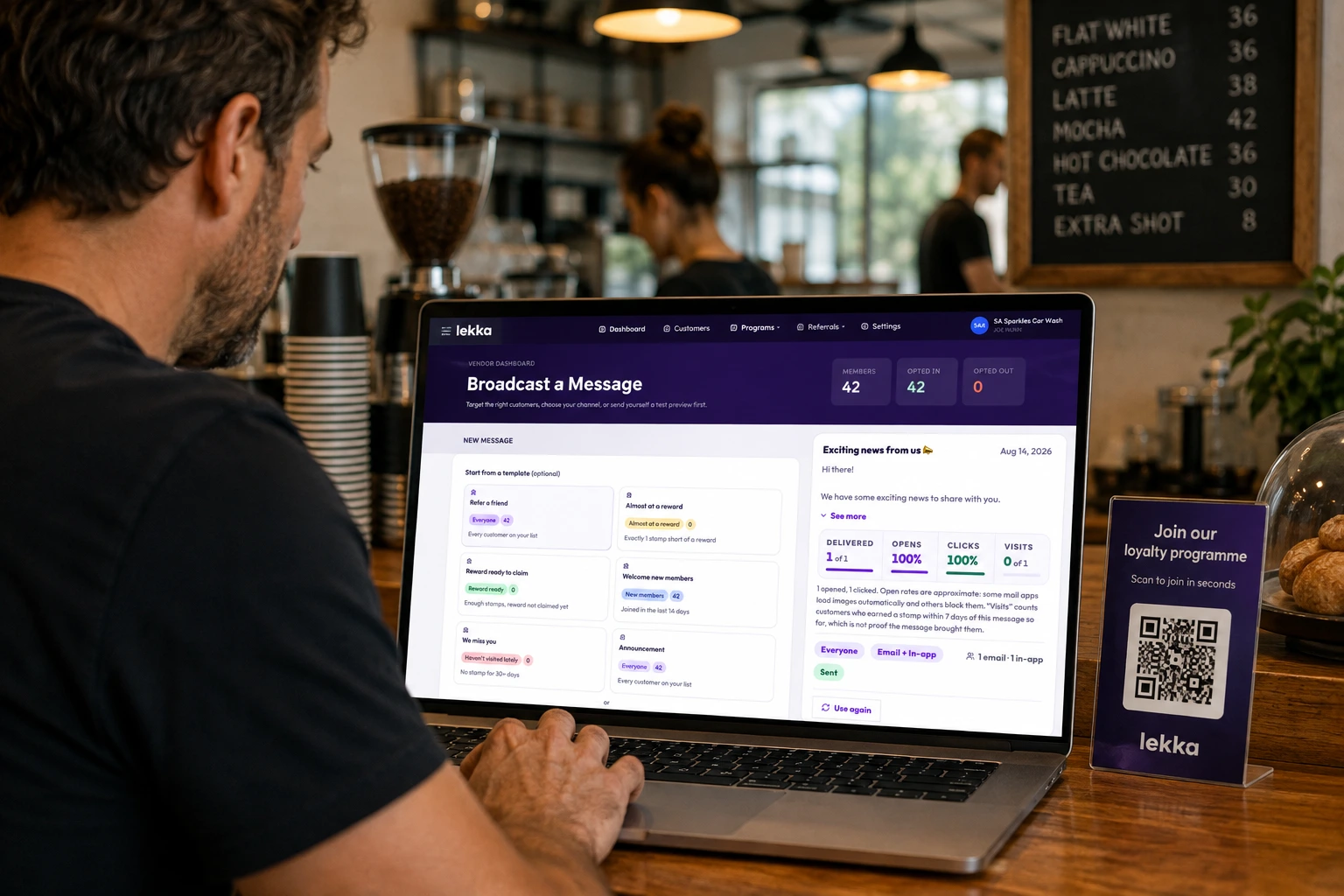
Liquor buyers are curious: new craft beers, limited-release whiskies, an interesting wine they haven't tried. That curiosity is a powerful reason to return, but only if they know what's landed. A loyalty programme that lets you message your members turns every new arrival, tasting, or case special into a direct prompt to the people most likely to care: your existing regulars.
A broadcast to your loyalty base, "new small-batch gin in stock, Friday tasting from 5pm", reaches people in a way a shelf-talker never will. It's the kind of direct, relevant marketing that used to be the preserve of big chains with CRM systems.
4. Recognise the regular who quietly spends thousands
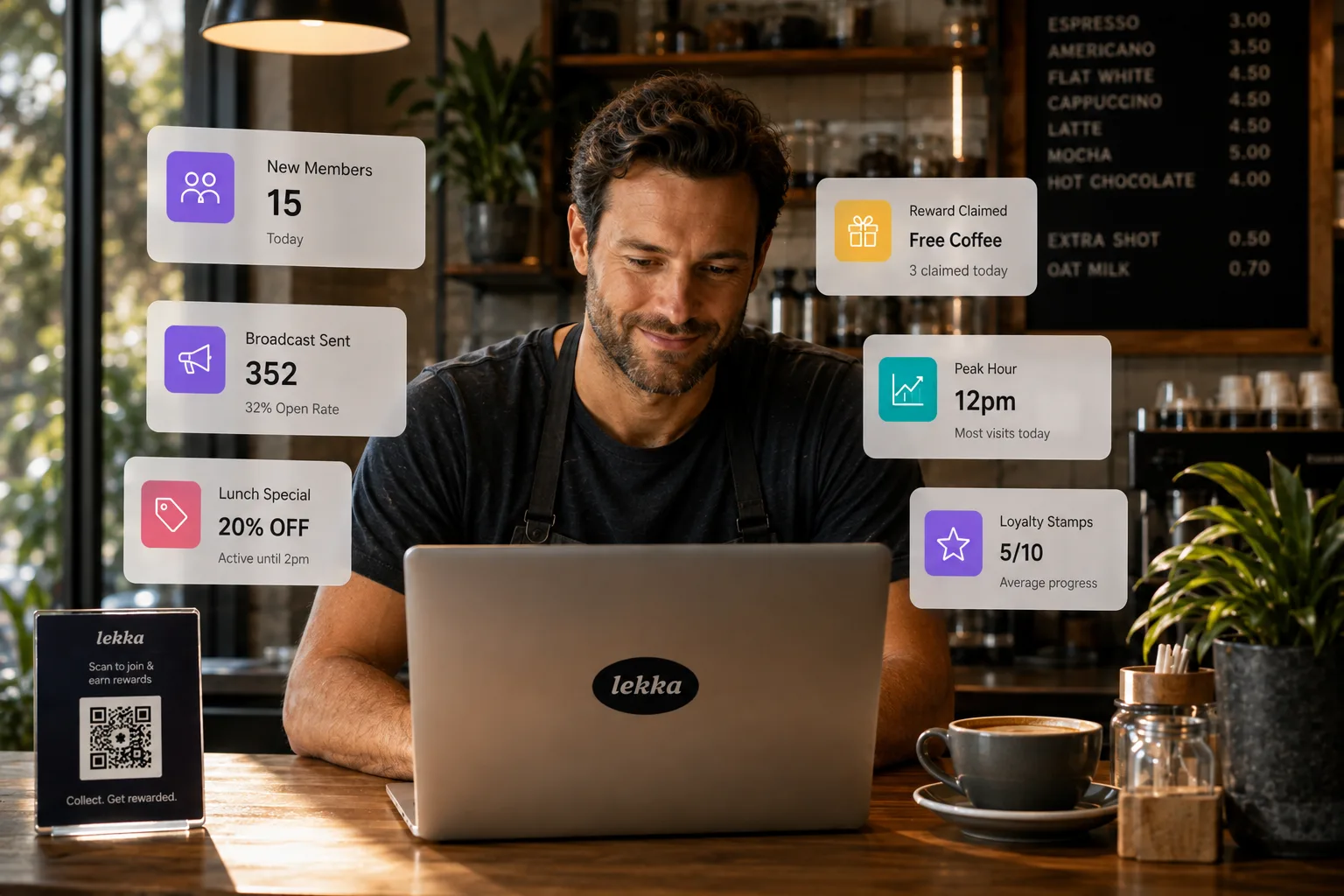
Some of your customers restock every week and spend more over a year than you'd guess. With cash-and-carry tills and anonymous paper cards, you have no way to know who they are. A digital loyalty card changes that: your dashboard shows who's collecting stamps, how often they buy, and who's close to a reward, so you can recognise and look after your best customers properly.
That recognition is itself a retention tool. People come back to places that make them feel known. The supermarket liquor aisle can't do that; an independent with a system behind the counter can.
Set up a bottle store loyalty card in minutes
Lekka is the digital loyalty card built for South African bottle stores: customers join by scanning a QR code, no app download, and you can message regulars about new stock and tastings.
See Lekka for bottle storesFree to start · no per-transaction fees · no contract
A few mistakes to avoid
- ✓Rewarding volume over loyalty: design around repeat visits, not bigger single buys.
- ✓Setting the qualifying spend wrong: pick a threshold near your average basket so a normal visit earns a stamp.
- ✓Making the reward forgettable: a free bottle or real rand-value off beats a token discount for a price-driven buyer.
- ✓Not telling regulars about new arrivals: that is the message your liquor customers most want to receive.
An independent bottle store can't beat the chains on price, and shouldn't try. Beat them on range, advice, recognition, and a loyalty card that rewards customers for coming back. Done responsibly, that's a combination a supermarket liquor aisle simply can't match.